Manufacturing companies across the United States are rapidly embracing digital transformation to improve efficiency, reduce operational costs, and remain competitive in an increasingly global marketplace. One of the most valuable investments manufacturers can make is implementing the best ERP software for manufacturing companies in USA.
Enterprise Resource Planning (ERP) software integrates every major business process into a single centralized platform. Instead of managing accounting, purchasing, production, inventory, warehouse operations, customer relationships, supply chains, and reporting separately, ERP software allows every department to work together using real-time data.
Whether you’re operating a small precision machine shop, a medium-sized plastics manufacturer, or a large multinational industrial enterprise, selecting the right ERP platform can dramatically improve operational performance.
This comprehensive guide explains everything manufacturers need to know before choosing an ERP solution.
What Is Manufacturing ERP Software?
Manufacturing ERP software is an integrated business management system specifically designed to help manufacturers plan, monitor, automate, and optimize production operations.
Unlike generic accounting software, manufacturing ERP includes specialized modules such as:
- Production Planning
- Material Requirements Planning (MRP)
- Inventory Management
- Warehouse Management
- Purchasing
- Quality Control
- Supply Chain Management
- Finance
- Human Resources
- CRM
- Sales Management
- Maintenance Scheduling
These systems provide one centralized database accessible by every department.
Why Manufacturing Companies Need ERP Software
Many manufacturers still rely on spreadsheets and disconnected software systems. As operations grow, these manual processes become inefficient.
ERP software solves common challenges including:
- Inventory inaccuracies
- Production delays
- Poor forecasting
- Purchasing inefficiencies
- Manual reporting
- Duplicate data entry
- Lack of visibility
- High operating costs
A modern ERP system helps organizations operate more efficiently while increasing profitability.
Key Features of the Best ERP Software for Manufacturing Companies
1. Material Requirements Planning (MRP)
MRP calculates:
- Raw materials
- Components
- Purchase timing
- Production schedules
- Capacity planning
This reduces stock shortages and over-purchasing.
2. Production Scheduling
Advanced scheduling helps manufacturers:
- Optimize machine utilization
- Balance workloads
- Reduce downtime
- Improve delivery accuracy
3. Inventory Management
Inventory modules include:
- Barcode scanning
- Warehouse tracking
- Batch management
- Serial numbers
- Lot control
- Cycle counting
Real-time inventory visibility improves decision-making.
4. Bill of Materials (BOM)
Manufacturing ERP stores detailed product structures including:
- Components
- Quantities
- Labor
- Operations
- Routing
This simplifies production planning.
5. Shop Floor Control
Managers can monitor:
- Production status
- Work orders
- Labor efficiency
- Machine utilization
- Scrap rates
- Downtime
6. Quality Management
Quality modules assist with:
- Inspection reports
- Non-conformance tracking
- Corrective actions
- ISO compliance
- Supplier quality
7. Supply Chain Management
ERP software improves supplier relationships by managing:
- Purchase orders
- Vendor performance
- Lead times
- Procurement
- Demand forecasting
8. Financial Management
Integrated accounting includes:
- General Ledger
- Accounts Payable
- Accounts Receivable
- Fixed Assets
- Cash Flow
- Financial Reporting
9. CRM Integration
Manufacturers can manage:
- Customer inquiries
- Quotes
- Sales pipeline
- Orders
- Customer service
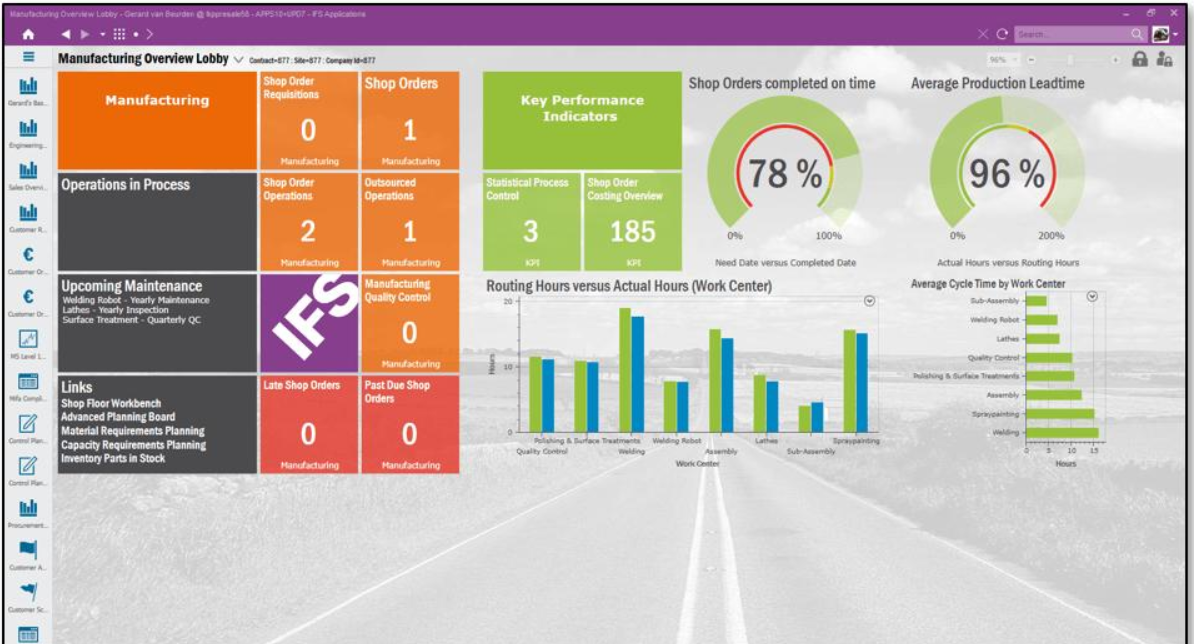
10. Business Intelligence Dashboard
Executives gain access to real-time KPIs including:
- Revenue
- Production efficiency
- Inventory turnover
- Profit margins
- Machine utilization
- Order fulfillment
Benefits of ERP for Manufacturing Companies
Increased Productivity
Automation reduces repetitive manual tasks.
Better Inventory Accuracy
Real-time inventory reduces costly stock discrepancies.
Lower Production Costs
Improved planning minimizes waste.
Faster Decision Making
Executives access live dashboards instead of waiting for reports.
Improved Customer Satisfaction
ERP helps companies deliver products on time.
Better Compliance
Manufacturers can comply with industry regulations through improved documentation and traceability.
Cloud ERP vs On-Premise ERP
Cloud ERP
Advantages:
- Lower upfront investment
- Automatic updates
- Remote access
- Faster deployment
- High scalability
Ideal for growing manufacturers.
On-Premise ERP
Advantages:
- Greater infrastructure control
- Internal data hosting
- Custom configurations
Suitable for organizations with strict security requirements.
Industries That Benefit from Manufacturing ERP
ERP solutions support a wide range of industries, including:
- Automotive
- Aerospace
- Electronics
- Medical Devices
- Food & Beverage
- Chemical Manufacturing
- Metal Fabrication
- Plastics
- Furniture
- Packaging
- Textile Manufacturing
- Industrial Equipment
ERP Implementation Process
Successful ERP implementation generally follows these phases:
1. Business Analysis
Evaluate workflows and identify business requirements.
2. Software Selection
Compare ERP vendors based on functionality and scalability.
3. Data Migration
Transfer existing customer, supplier, inventory, and financial data.
4. System Configuration
Customize modules to match business processes.
5. Employee Training
Train users across all departments.
6. Testing
Conduct user acceptance testing before launch.
7. Go-Live
Deploy the ERP system.
8. Continuous Optimization
Review KPIs and optimize workflows regularly.
Common ERP Implementation Challenges
Manufacturers may encounter:
- Employee resistance
- Poor data quality
- Budget overruns
- Scope creep
- Insufficient training
- Inadequate planning
Strong project management helps minimize these risks.
Essential ERP Modules
A complete manufacturing ERP typically includes:
- Manufacturing
- MRP
- Inventory
- Procurement
- Sales
- CRM
- Finance
- HR
- Payroll
- Warehouse Management
- Maintenance
- Project Management
- Analytics
- Reporting
- Quality Assurance
How ERP Improves Manufacturing Efficiency
ERP provides real-time visibility into every stage of production.
Examples include:
- Monitoring machine capacity
- Tracking raw materials
- Managing purchase orders
- Forecasting customer demand
- Reducing production bottlenecks
- Optimizing warehouse space
These improvements increase operational efficiency while reducing costs.
Future Trends in Manufacturing ERP
ERP platforms continue evolving with emerging technologies such as:
- Artificial Intelligence (AI)
- Machine Learning
- Predictive Analytics
- Industrial Internet of Things (IIoT)
- Robotic Process Automation
- Digital Twins
- Advanced Supply Chain Analytics
- Cloud Computing
- Mobile ERP Applications
Manufacturers adopting these technologies can improve productivity and remain competitive.
Frequently Asked Questions
What is ERP software?
ERP software integrates accounting, production, inventory, purchasing, sales, and other business functions into one centralized system.
Is cloud ERP suitable for manufacturers?
Yes. Cloud ERP offers scalability, lower infrastructure costs, remote access, and automatic software updates.
How long does ERP implementation take?
Implementation timelines vary depending on company size, customization, and complexity. Small projects may take several months, while enterprise deployments can take a year or longer.
Can ERP integrate with existing systems?
Most modern ERP platforms support integration with CRM software, eCommerce platforms, accounting applications, MES systems, and business intelligence tools.
Is ERP expensive?
Costs depend on the number of users, deployment model, modules, customization, and implementation services. Cloud subscriptions typically reduce upfront investment compared with on-premise installations.
Conclusion
Choosing the best ERP software for manufacturing companies in USA is a strategic decision that can transform production efficiency, inventory accuracy, financial visibility, and long-term business growth. By evaluating features such as MRP, production planning, quality management, supply chain optimization, analytics, and cloud capabilities, manufacturers can select an ERP solution that aligns with their operational needs and future expansion plans.
A well-planned ERP implementation, combined with employee training and continuous optimization, enables organizations to streamline operations, reduce costs, and build a more resilient manufacturing business.